

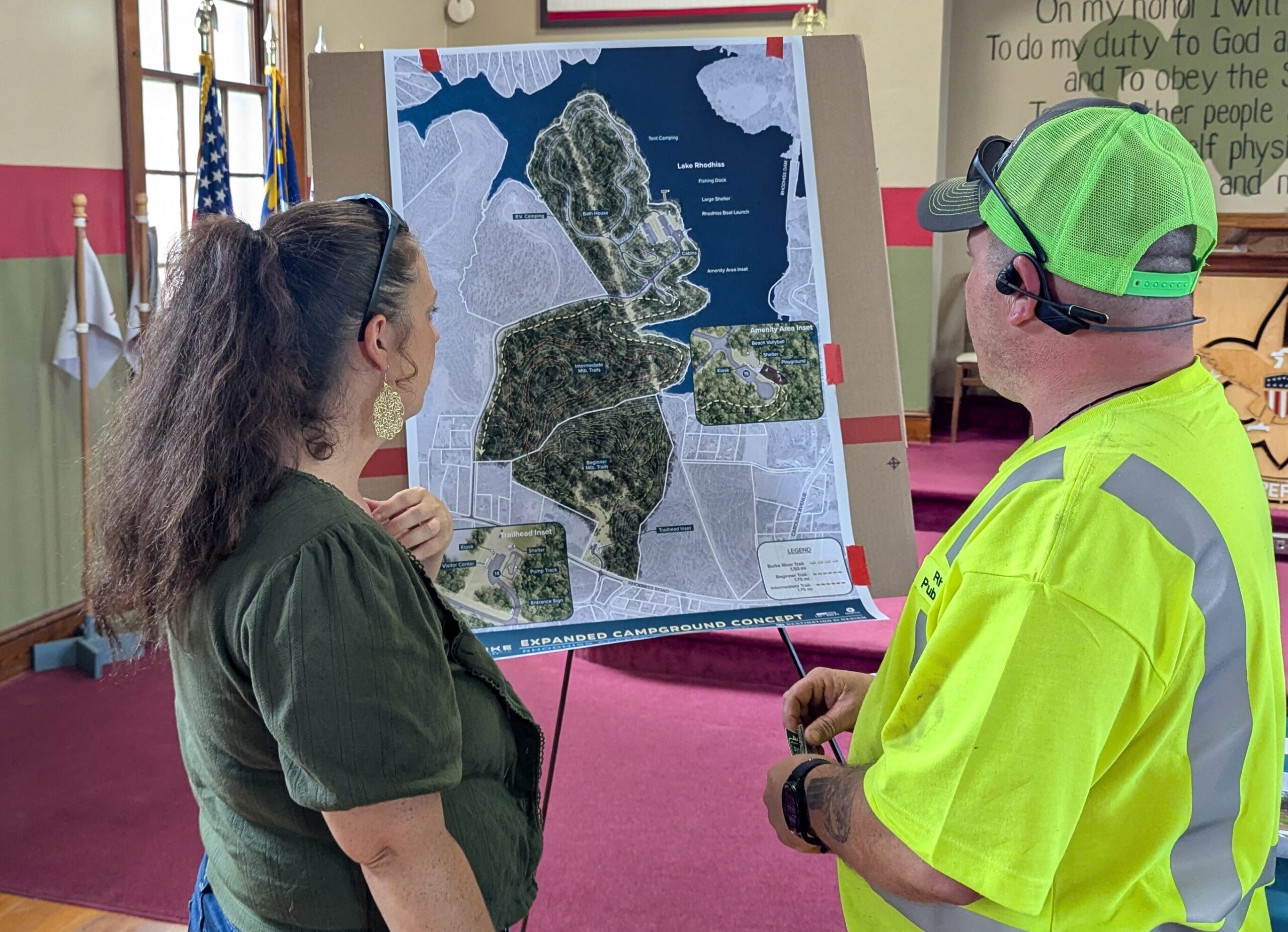
Burke River Trail Association and the Town of Rhodhiss recently invited the community to help imagine the future of the Weaver Lane Boat Ramp property and surrounding Duke Energy lands. Destination by Design prepared two preliminary concepts showing a range of possible outdoor recreation amenities, and residents were asked to identify what mattered most to them. From the 17 attendees, the strongest themes were clear: a swim beach, better fishing access and opportunities for fishing tournaments, boat docking, and supporting amenities such as concessions, picnic areas and camping.
The public meeting was one step in a much larger planning process. BRTA and the Town have also been working with Duke Energy, the NC Wildlife Resources Commission and Burke County to better understand what uses may be appropriate for the site and what would be needed for future approvals. Because the property is owned by Duke Energy and lies within the FERC project boundary, any final recreation plan will require additional review and approval before it can move forward.
There is a little bit of a chicken-and-egg challenge in planning a site like this. Before asking Duke and other agencies to consider a specific recreation plan, Rhodhiss needs to know what can realistically fit on the property and what the community actually wants. At the same time, the Town does not want to spend time developing amenities that ultimately would not be allowed. That is why the process has included concept planning, public input and ongoing conversations with Duke, NCWRC and other partners at the same time.
The feedback is now helping Rhodhiss narrow the two preliminary concepts into one more focused vision. Rather than trying to include every possible amenity, the next plan will concentrate on the ideas that received the strongest support and make the most sense for the site. From there, the Town and BRTA can continue working with Duke Energy, regulatory agencies and potential partners to determine what is feasible, how it could be funded and operated, and what the next steps should be.
Learn more about the planning process and project history on our project page.